India’s taxation system has undergone its most significant transformation since GST implementation in 2017. The GST Council’s historic decision in September 2025 ushers in GST 2.0, a comprehensive reform that simplifies tax structure while providing substantial relief to consumers and businesses. This revolutionary change takes effect from September 22, 2025, marking a new era in India’s indirect taxation landscape.
Revolutionary Three-Tier Structure Replaces Complex System
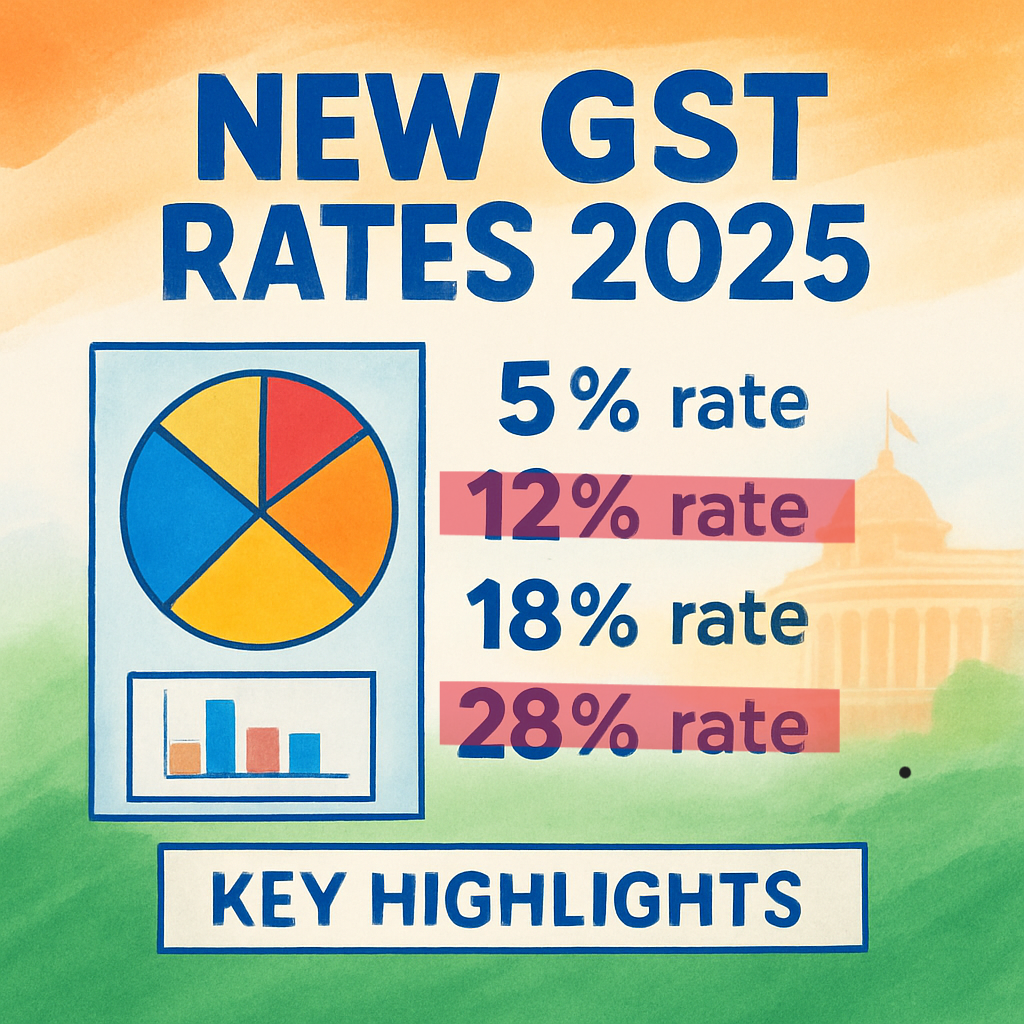
The new GST framework eliminates the existing four-slab structure (5%, 12%, 18%, 28%) and introduces a streamlined three-tier system:
- 5% (Merit Rate): Essential goods and services
- 18% (Standard Rate): Most goods and services
- 40% (Demerit Rate): Luxury and sin goods
This rationalization addresses years of classification disputes and compliance complexities that plagued businesses, particularly MSMEs.
Massive Consumer Relief: What Gets Significantly Cheaper
Daily Essentials See Major Tax Cuts
Personal care products experience dramatic reductions from 18% to 5%, including hair oil, shampoo, toiletries, toothpaste, and shaving cream. Food items drop from 12% to 5%, covering butter, ghee, cheese, and pre-packaged snacks.
Healthcare Becomes More Accessible
Individual health and life insurance becomes completely tax-free (from 18%), while medical equipment like thermometers, diagnostic kits, and glucometers move to the 5% bracket. This represents substantial savings for healthcare consumers.
Education Gets Complete Tax Relief
Educational materials including maps, charts, globes, pencils, exercise books, and notebooks are now completely GST-exempt, supporting the government’s education initiatives.
Automotive Sector Receives Significant Boost
Small cars (up to 1200cc petrol/1500cc diesel) and motorcycles (350cc and below) drop from 28% to 18%, making vehicles more affordable for middle-class families. Three-wheeled vehicles and commercial goods vehicles also benefit from this reduction.
Consumer Electronics Become More Affordable
Air conditioners, televisions above 32 inches, monitors, projectors, and dishwashing machines all move from the 28% to 18% bracket, making modern appliances accessible to more households.
Agricultural Sector Gets Comprehensive Support
The reform provides extensive relief to farmers through reduced GST on tractors (12% to 5%), agricultural machinery, drip irrigation systems, and tractor parts (18% to 5%). This comprehensive support aims to boost agricultural productivity and reduce farming costs.
Strategic Luxury Tax: The 40% Demerit Rate
The new 40% rate targets luxury and sin goods including high-end vehicles, aerated beverages, sugary drinks, and premium lifestyle products. This creates a progressive tax structure where luxury consumption supports essential goods subsidization.
Note: Tobacco products retain their current 28% GST plus additional cess until further notification.
Economic Impact and Growth Projections
Inflation Reduction and Consumer Benefits
Economists project the reforms could reduce inflation by up to 1.1 percentage points as lower taxes on essentials decrease overall price levels. The government expects enhanced purchasing power to stimulate consumption-led growth.
Business and MSME Advantages
The simplified structure addresses critical MSME challenges including inverted duty structures where input taxes exceeded output taxes, creating working capital blockages. Fewer slabs reduce classification disputes and compliance costs, allowing businesses to focus on growth rather than tax compliance.
Revenue Strategy and Long-term Vision
Despite an estimated short-term revenue loss of ₹48,000 crore, the government anticipates higher long-term collections through increased economic activity and broader tax base formalization. Commerce Minister Piyush Goyal termed this “the biggest reform since independence”.
Sectoral Winners and Transformation
Banking and Financial Services
Banks anticipate increased credit demand as MSMEs benefit from reduced input costs and simplified compliance. Lower GST on consumer goods is expected to drive retail lending growth as affordability improves.
Manufacturing and FMCG
The FMCG sector gains significantly as daily essentials become more affordable, potentially boosting demand volumes. Manufacturing benefits from resolved inverted duty structures and clearer tax classifications.
Automotive Industry
With vehicles becoming more affordable, the automotive sector expects substantial demand revival. Lower GST rates on both personal and commercial vehicles support the government’s mobility and economic growth objectives.
Technology and Process Improvements
Beyond rate changes, GST 2.0 introduces:
- Automated refund processes for faster working capital release
- Pre-filled returns reducing manual filing burden
- Streamlined registration procedures
- Enhanced digital infrastructure for better compliance tracking
Implementation Timeline and Compliance
The reforms take effect September 22, 2025, with comprehensive monitoring mechanisms to ensure businesses pass benefits to consumers. The government has established price tracking systems to monitor approximately 400 items for proper rate implementation.
Strategic Recommendations for Stakeholders
For Businesses
Update pricing strategies immediately, revise inventory valuations, train staff on new requirements, and prepare systems for the transition. The simplified structure offers opportunities for better supply chain optimization and reduced compliance costs.
For Consumers
Verify that retailers pass on GST benefits and plan major purchases of electronics, vehicles, and appliances to maximize savings from the reduced rates.
Long-term Economic Vision
This reform positions India’s tax system to support the journey toward becoming a $30 trillion economy by 2047. The simplified structure enhances ease of doing business while creating a more progressive taxation system that balances revenue needs with economic stimulation.
The GST 2.0 reform represents a carefully calibrated economic strategy that makes essentials affordable while maintaining revenue through luxury taxes. Its success in driving consumption-led growth and business formalization will define India’s economic trajectory in the coming years.